

Interview with His Holiness the Dalai Lama …
… about hate, religion, dialogue, 9/11, fundamentalism & more
by Raimondo Bultrini
- The Dalai Lamas – About
- The Dalai Lama in Global Perspective
- 5th Dalai Lama, Ngawang Lobsang Gyatso — About
- 5th Dalai Lama, Ngawang Lobsang Gyatso — Opinion on His Rule
- 13th Dalai Lama, Thubten Gyatso – About
- 13th Dalai Lama, Thubten Gyatso – Opinion on His Rule
- 14th Dalai Lama – About
- 14th Dalai Lama – His Accomplishments
- HHDL
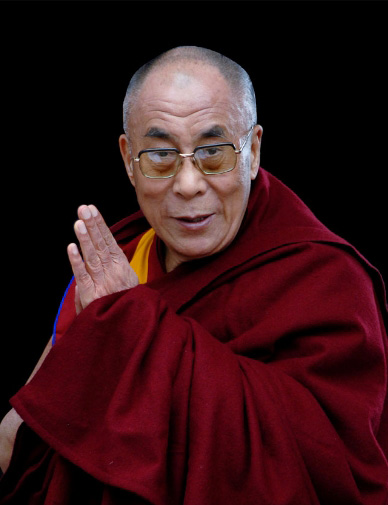
The XIVth Dalai Lama, Tenzin Gyatso.
© www.dalailama.com - printable4_fs
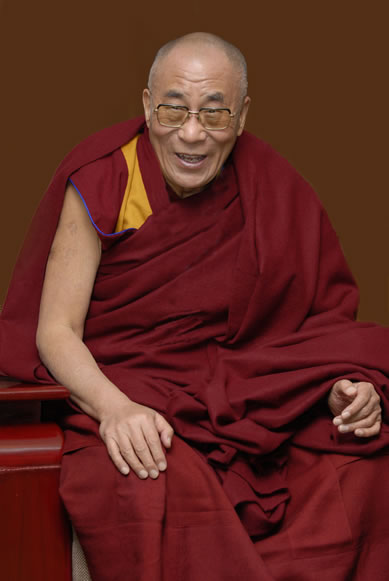
The XIVth Dalai Lama, Tenzin Gyatso.
© www.dalailama.com - printable1_fs
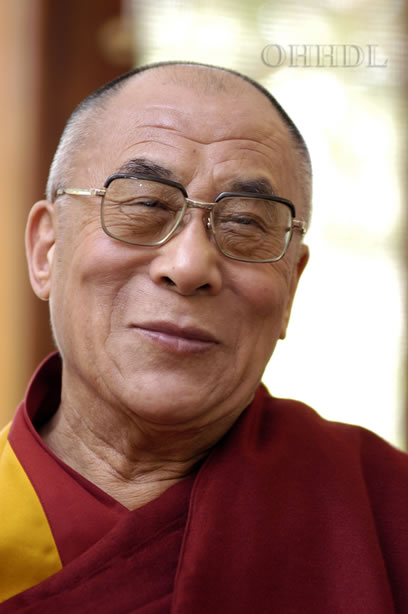
The XIVth Dalai Lama, Tenzin Gyatso.
© www.dalailama.com - printable9_fs
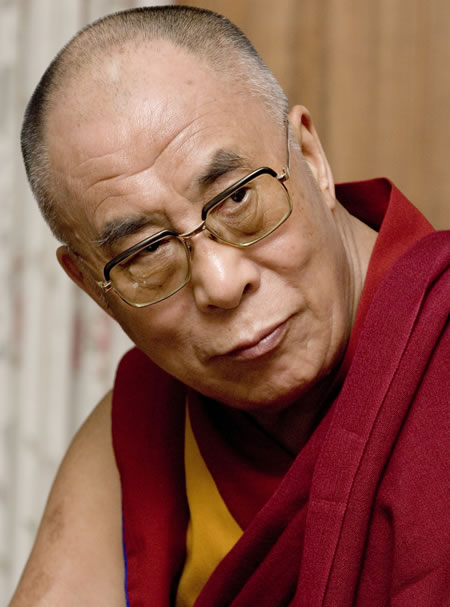
The XIVth Dalai Lama, Tenzin Gyatso.
© www.dalailama.com - printable6_fs
The XIVth Dalai Lama, Tenzin Gyatso.
© Tenzin Jamphel / OHHDL. Details: Official Dalai Lama Facebook Site - printable8_fs
The XIVth Dalai Lama, Tenzin Gyatso.
© www.dalailama.com - printable7_fs
The XIVth Dalai Lama, Tenzin Gyatso.
© www.dalailama.com

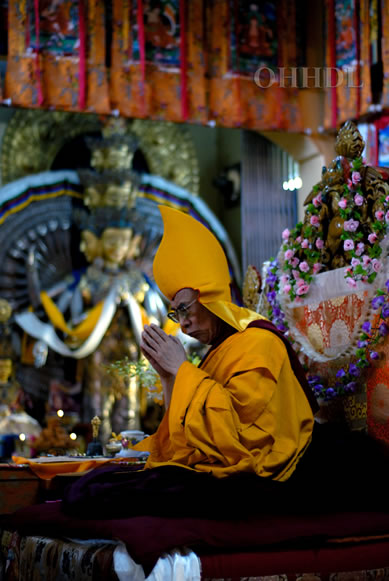
The Dalai Lamas
“The Dalai Lamas are held by their followers to be advanced Mahayana bodhisattvas that is compassionate beings who so to speak have postponed their own entry into nirvana to help suffering humanity. Thus they are thought to be well on the way to Buddhahood, developing perfection in wisdom and compassion for the benefit of all sentient beings. It is this that justifies doctrinally the socio-political involvement of the Dalai Lamas, as an expression of a bodhisattva’s compassionate wish to help others.”
“We should note here two things a Dalai Lama is not. First, he is not in any simple sense a ‘god-king’. He may be a sort of king, but he is not for Buddhism a god. Second, the Dalai Lama is not the ‘head of Tibetan Buddhism’, let alone of Buddhism as a whole. There are many traditions of Buddhism. Some have nominated ‘Heads’; some do not. Within Tibet too there are a number of traditions. The Head of the Geluk tradtion is whoever is abbot of Ganden monastery, in succession to Tsong kha pa, the fourteenth/fifteenth century Geluk founder.”
Paul Williams, “Dalai Lama”, in Clarke, P. B., Encyclopedia of New Religious Movements, (New York: Routledge, 2006), p. 136.
The Dalai Lama in Global Perspective
“Westerners who study the system of reincarnating lamas are often understandably skeptical about it, but it seems clear that somehow the Tibetans who choose the Dalai Lamas have managed to find a remarkable succession of unusually gifted people. Even given the profound devotion that Tibetans feel for their Dalai Lamas, it would be difficult to disguise an incarnation who was stupid, arrogant, greedy, or belligerent. Those Dalai Lamas who attained maturity, however, have consistently distinguished themselves in their teaching, writing, and their personal examples. The present Dalai Lama is a testament to the success of the system through which Dalai Lamas are found, and it is improbable that his remarkable Accomplishments are merely due to good training. Many monks follow the same basic training as the Dalai Lamas, but somehow the Dalai Lamas tend to rise above others of their generation in terms of scholarship, personal meditative attainments, and teaching abilities. It is true that they receive the best training, and they also have the finest teachers, but these facts alone fail to account for their accomplishments. In Western countries, many students enroll in the finest colleges, study with the best teachers, and still fail to rise above mediocrity because they are lacking in intellectual gifts.”
“There are obviously problems with the system, particularly the problem of lapses of leadership while newly recognized Dalai Lamas reach maturity. The system worked well enough in the past when Tibet was not beset by hostile neighbors, but it is difficult to imagine any country in the present age being able to endure periods of eighteen years or more without a true leader. It is not surprising, therefore, that the present Dalai Lama has expressed doubts about the continuing viability of the institution of the Dalai Lamas and has indicated that he may not choose to reincarnate. He has also proposed that the office of Dalai Lama become an elected position, with the Tibetan people voting for their spiritual leader. The Dalai Lama appears to recognize the flaws in the present system and apparently hopes that the institution will be adapted to changing times.”
John Powers, “Introduction to Tibetan Buddhism”, Snow Lion Publications, 1995, pp. 186–87.
The Fifth Dalai Lama, Ngawang Lobsang Gyatso
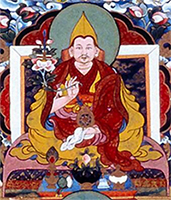
“The 5th Dalai Lama, known to Tibetan history simply as the ‘Great Fifth,’ is renowned as the leader under whom Tibet was unified in 1642 in the wake of bitter civil war. The era of the 5th Dalai Lama—roughly the period from his enthronement as leader of Tibet in 1642 to the dawn of the 18th century, when his government began to lose control—was the formative moment in the creation of a Tibetan national identity, an identity centered in large part upon the Dalai Lama, the Potala Palace of the Dalai Lamas, and the holy temples of Lhasa. During this era the Dalai Lama was transformed from an ordinary incarnation among the many associated with particular Buddhist schools into the protector of the country. In 1646 one writer could say that, due to the good works of the 5th Dalai Lama, the whole of Tibet was now centered under a white parasol of benevolent protection. And in 1698 another writer could say that the Dalai Lama’s government serves Tibet just as a bodhisattva—that saintly hero of Mahayana Buddhism—serves all of humanity.”
Kurtis R. Schaeffer, “The Fifth Dalai Lama Ngawang Lopsang Gyatso”, in The Dalai Lamas: A Visual History, Serinda Publications, Edited by Martin Brauen, 2005, p. 65.
The Fifth Dalai Lama: Opinion on His Rule
“By most accounts the [5th] Dalai Lama was by the standards of his age a reasonably tolerant and benevolent ruler.”
Paul Williams, “Dalai Lama”, in (Clarke, 2006, p. 136).
“The fifth Dalai Lama, Ngawang Losang Gyatso (1617–1682), popularly referred to as ‘The Great Fifth,’ was the most dynamic and influential of the early Dalai Lamas. He was a great teacher, an accomplished tantric yogin, and a prodigious writer. His literary output surpasses the combined total of all the other Dalai Lamas. In addition to his scholastic achievements, he proved to be an able statesman, and he united the three provinces of Tibet (the Central, South, and West) for the first time since the assassination of king Lang Darma in the mid-ninth century.”
“Although he was rather heavy-handed with the Jonangpas and the Karmapas, his treatment of other orders was often generous. He was particularly supportive of Nyingma, and he himself was an ardent practitioner of several Nyingma tantric lineages. Snellgrove and Richardson contend that on the whole his actions proved to be beneficial and stabilizing, despite the obvious hard feelings they engendered among his opponents:
‘The older orders may preserve some bitter memories of the fifth Dalai Lama, for no one likes a diminution of wealth and power, but there is no doubt that without his moderating and controlling hand, their lot might have been very much worse. It must also be said that at that time, despite their new political interests and responsibilities, the dGe-lugs-pas remained the freshest and most zealous of the Tibetan religious orders.’” (Snellgrove & Richardson, A Cultural History of Tibet, p. 197)
(Powers 1995: 145,146–47)
More about the Fifth Dalai Lama
- “The Fifth Dalai Lama and his Reunification of Tibet” by Samten G. Karmay
- “The Great Fifth” by Samten G. Karmay
The Thirteenth Dalai Lama, Thubten Gyatso
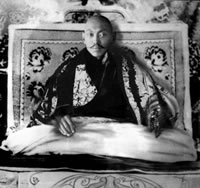
“The other Dalai Lama who was particularly important was the Thirteenth (1876-1933). A strong ruler he tried, generally unsuccessfully, to modernize Tibet. The ‘Great Thirteenth’ also took advantage of weakening Chinese influence in the wake of the 1911 imperial collapse to reassert de facto what Tibetans have always considered to be truly the case, the complete independence of Tibet as a nation from China.”
Paul Williams, “Dalai Lama” in (Clarke, 2006, p. 137).
“Some may ask how the Dalai Lama’s rule compared with that of rulers in European or American countries. But such a comparison would not be fair, unless applied to the Europe of several hundred years ago, when it was still in the same stage of feudal development that Tibet is in at the present day. Certain it is that Tibetans would not be happy if they were governed as people are in England; and it is probable that they are on the whole happier than are people in Europe or America under their own governments. Great changes will come in time; but unless they come slowly, when the people are ready to assimilate them, they will cause great unhappiness. Meanwhile, the general administration in Tibet is more orderly than the administration in China; the Tibetan standard of living is higher than the standard in China or India; and the status of women in Tibet is higher than their status in either of those two large countries.”
Sir Charles Bell, “Portrait of a Dalai Lama: The Life and Times of the Great Thirteenth”, Wisdom Publications, 1987, pp. 443–444.
The Thirteenth Dalai Lama: Opinion on His Rule
“Was the Dalai Lama on the whole a good ruler? We may safely say that he was, on the spiritual as well as the secular side. As for the former, he had studied the complicated structure of Tibetan Buddhism with exceptional energy when a boy, and had become exceptionally learned in it. He improved the standard of the monks, made them keep up their studies, checked greed, laziness and bribery among them, and diminished their interference in politics. He took care of the innumerable religious buildings as far as possible. On the whole it must certainly be said that he increased the spirituality of Tibetan Buddhism.
“On the secular side he improved law and order, increased his own contact with his people, introduced more merciful standards into the administration of justice and, as stated above, lessened monastic domination in secular affairs. In the hope of preventing Chinese invasions he built up an army in the face of opposition from the monasteries; prior to his rule there was practically no army at all. In view of the extreme stringency of Tibetan finance, the intense monastic opposition and other difficulties, he could have gone no farther than he did.
“During his reign the Dalai Lama abolished Chinese domination entirely throughout the large part of Tibet governed by him, excluding Chinese officials and soldiers. That portion of Tibet became a completely independent kingdom, and remained independent during the last twenty years of his life.”
Sir Charles Bell in (Bell 1987: 444).
More about the Thirteenth Dalai Lama
- “The Thirteenth Dalai Lama, Tubten Gyatso” by Tsering Shakya
The Fourteenth Dalai Lama, Tenzin Gyatso
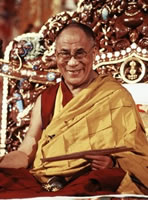
“The current Fourteenth Dalai Lama (Tenzin Gyatso) was born in 1935. The Chinese invaded Tibet in the early 1950s and the Dalai Lama left Tibet in 1959. He now lives as a refugee in Dharamsala, North India, where he presides over the Tibetan Government in Exile. A learned and charismatic figure, he has been active in promoting the cause of his country’s independence from China. He also promulgates Buddhism, world peace, and research into Buddhism and science, through his frequent travels, teaching, and books. Advocating ‘universal responsibility and a good heart’, he was awarded the Nobel Peace Prize in 1989.”
Paul Williams, “Dalai Lama”, in (Clarke, 2006, p. 137).
Biography
The Fourteenth Dalai Lama: His Accomplishments
“When one considers the origins of the present Dalai Lama, his successes are remarkable. Born in a remote village in eastern Tibet, driven from his country by an invading army and forced to start over in exile, he is today a Nobel Prize laureate and one of the world’s most revered religious leaders. When one considers the odds against randomly choosing a young child from a remote Tibetan village, educating him in a traditional Tibetan monastic curriculum, and his later winning the Nobel Peace Prize, his successes might give skeptics pause. As Glenn Mullin remarks of the fourteenth Dalai Lama,
‘the depth of his learning, wisdom and profound insight into the nature of human existence has won him hundreds of thousands of friends around the world. His humor, warmth and compassionate energy stand as living evidence of the strength and efficacy of Tibetan Buddhism, and of its value to human society.’” (Mullin, Glenn, Selected Works of the Dalai Lama II, 1982, p. 220)
(Powers 1995: 187)
In Rimini, on the morning of the second day of ceremonies and meetings in that most opulent of the Adriatic coast resorts, the Dalai Lama, in exile from Tibet, had an encounter which in these times seems a good omen.
On invitation from the Associazione Italia-Tibet in the medieval town of Pennabilli, Tenzin Gyatso, a monk and Nobel peace prize winner, embraced the Muslim Imam of Rimini before the local Catholic bishop and a vast audience.
It was an emotional moment for everyone and there were tears in the eyes of many people at the thought of the hatred and violence instilled elsewhere in Italy and in the world by a few extremists.
“Whatever the reasons, let us reflect on the fact that they are unhappy and let us try to share their unhappiness” is the radical piece of advice that the XlVth Dalai Lama had to offer westerners in this interview at the end of his visit to Rimini.

Q. Your Holiness, you have often asked that we try to
understand the reasons at the roots of hatred. What do you deduce about
the origins of what has today been called a “clash of civilisations”?
A. “I have said on other occasions, after the terrible and painful
event of 9/11, that the cause is to be looked for in earlier centuries,
the twentieth century, the nineteenth century and even earlier.
Colonisation was followed by western progress while the Islamic nations
were left behind. But they were not the only ones. Many Indians and
Asians have had problems with the so-called ‘American cultural
invasion’. For many reasons the Muslims consider the western way of
life a serious threat to their traditions. Then there are the political
reasons, because America is Israel’s greatest ally and so on, but the
list of causes, as you know, would be a long one. First of all we
should consider that this long lasting dispute has created and hardened
enormous emotional conflicts which are not easily resolved with a short
term strategy.”
Q. What do you mean by short term strategy?
A. “That of strict security provisions, which are necessary but have
consequences which are not always controllable. For me, as a Buddhist
and a religious person, what would be more interesting is an intensive
long term cure because there is a need to reconstruct our world’s
immune system. When the system is strong, minor infections do not
damage us, but when it is weak then the risk is that illnesses can take
over body and mind.”
Q. And how can we reconstruct a weakened world system?
A. “What is necessary, first of all, is to tear out the roots of
negative emotions, of afflictions, to extinguish the very source of
anger and hatred. Then a respect for the reciprocal dimensions will
soon be re-established in the relationships between North and South,
between rich and poor, between atheists and Christians.”
Q. Your Holiness is aware that that would take a long time, perhaps too long for us to live to see the results.
A. “Unfortunately, up to now, only negative seeds have been planted,
with human intelligence on the part of a few, being used to create as
much damage as possible to the whole of humanity, with no care for
children, for the innocent, even for their own brothers in faith. Such
actions are not easily wiped out of the memory, but what is needed, in
order not to continue to damage minds with negative attitudes, is a
counter-measure, beginning with the promotion of human values because
we are human beings, and we must live together.”
Q. What can the West or westerners do in a concrete way at this point?
A. “Listen. Listen to their complaints and their reasons. They are unhappy and we should share their unhappiness.”
Q. Your Holiness, you have to admit that is a bit difficult.
A. “But if we analyse the problem we can see that the limits of the
fundamentalists lie in their inability to tolerate even the idea of
dialogue, there is proof in their attempts to be invisible when they
carry out their actions. Among the Imans there are different
interpretations of the Koran but the final understanding is left to the
individual. This is why there are extremists and black sheep, as there
are in any religion.”
Q. Even in Buddhism?
A. “Certainly even in Buddhism. In 1997 a group claiming to be from my
same religious school were strongly suspected of having killed a lama
who was very dear to me, the director of the School of Tibetan
Dialectics in Dharamsala, and two monks, translators who were playing
an important role in interpreting with the Chinese. These same people
have beaten up and threatened other Tibetans in the name of their
vision, which I would define as Buddhist integralism. They consider a
certain protecting spirit, that I used to pray to and that I now
distrust to be as important as the Buddha himself. In order to assert
this, they went on to damage those round them instead of respecting
them and understanding them, in line with the teachings of the man who
spread the principles of universal compassion five centuries before
Jesus Christ. From this point of view our experience is no
different from that of Christianity, or of Hinduism.”
Q. In your opinion do the suicide killers belong to a fundamentalist army organised on a global scale or not?
A. “lf terror organisations find people ready to follow their orders,
the seeds of hatred automatically take hold. Many dear friends, who are
Muslims are worried about the actions of those who are claiming to be
Muslim but really they are not, because in both modern and ancient
Islam the tolerant bases of the religion have inspired generations of
erudite and wise men. For example, a certain banking system is
forbidden because it is considered to be a form of exploitation of man
by man, this is a noble motivation. A journalist who lived in Teheran
during the years of the Ayatollahs’ rule told me that a Mullah that he
knew had received very rich donations and he had distributed them
equally among the poor. This is compassion. For this reason, we cannot
hold it against all of them, it would be a total mistake. Even we
Tibetans cannot attribute our present condition of suffering to the
Chinese. Looking at one’s own mistakes is the beginning of a process of
universal understanding.”
Raimondo Bultrini
Engl. Trans. by Alison Duguid
© Merigar, Dzogchen Community Italy, 2005
With kind permission from Merigar
www.dzogchen.it
The Dalai Lamas – About
Raimondo Bultrini – About
Header image: © www.dalailama.com
See also
- Dalai Lama Interview – Rome 2014 by Raimondo Bultrini